
Crude Oil Cracking: Coking Drum Quick-Access Service Breachings.
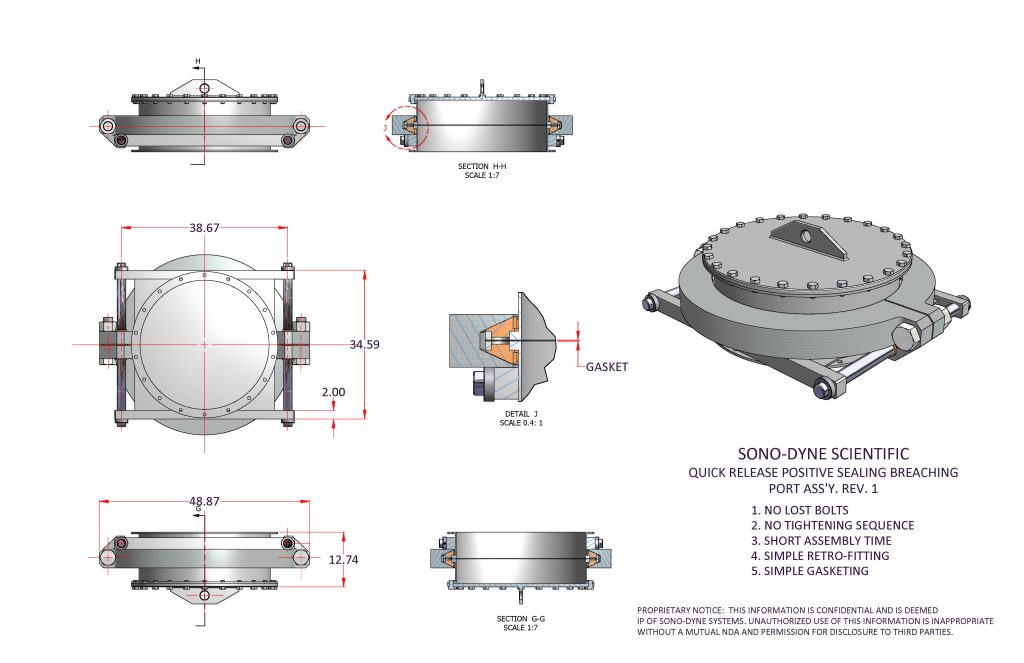
Removing and replacing numerous threaded fasteners in conventional flanged connections is a highly time consuming laborious task with the potential loss of critical bolts while working under hazardous conditions. Our solution eliminates the threaded bolt fasteners holding conventional flanges together including the need to torque them down in any geometric sequence. ( All rights reserved ) IP is for sale..
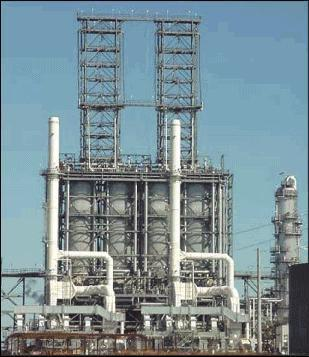
Typical heights can be about 60 ft.or more. Drum is shown here at a greatly reduced height for clarity.
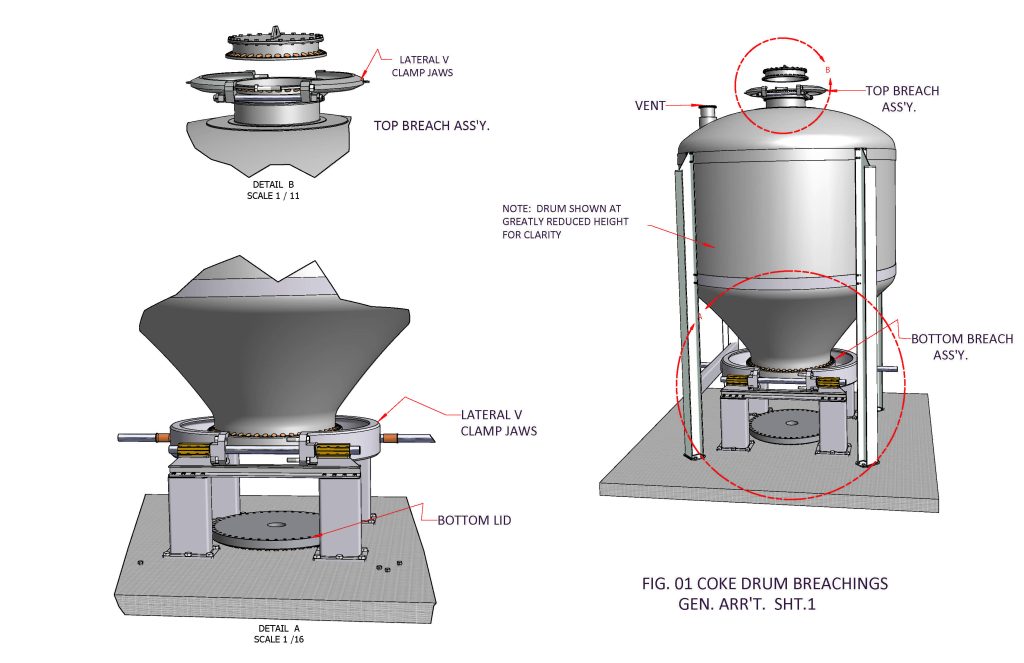
The bottom breach is geometrically similar to the top except for the larger diameter and deeper clamping geometry relative to the cover sizes. The higher the internal pressure, the greater the sealing forces and the gaskets need not have holes in them to accomodate any bolts.
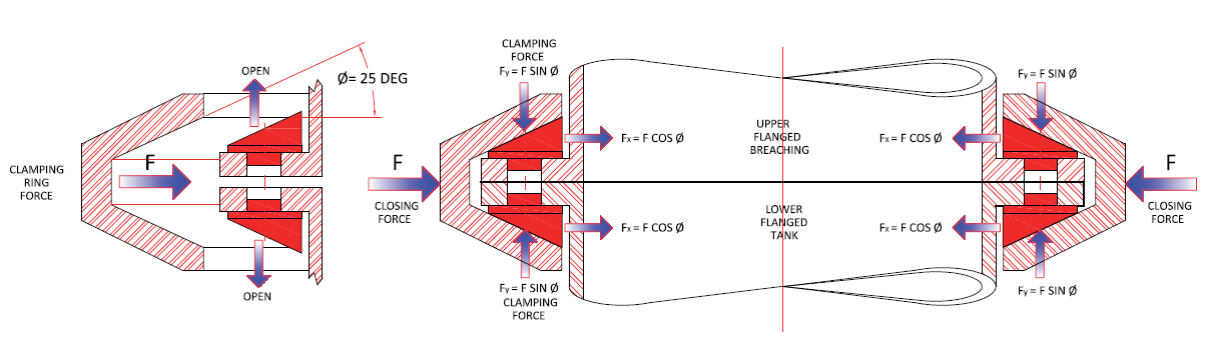
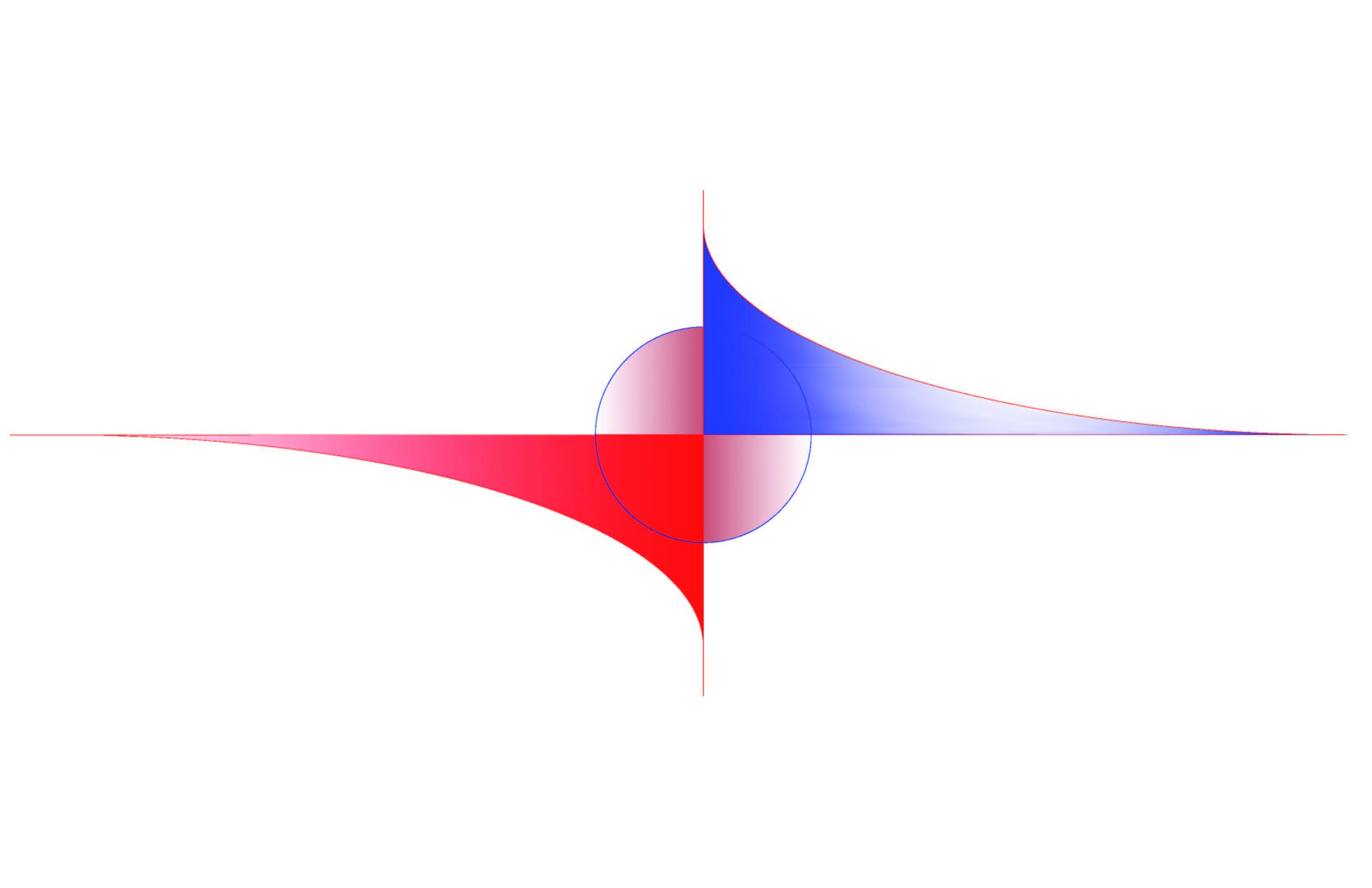
The inclined plane generates a vertical clamping force Fy on the flanges when horozontally loaded Fx by the two semi-circular vee clamping jaws when tensioned by high strength structural clamping bolts.
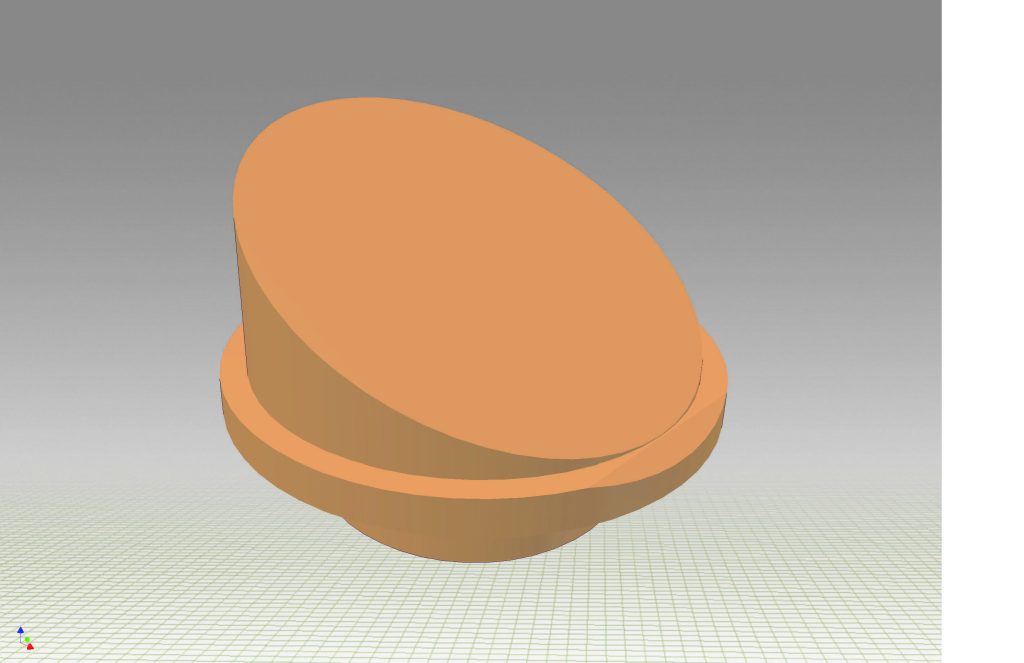
CNC machined Red Brass loading buttons are press-fitted permanently into the existing holes of both mating flanges where the conventional bolts would normally be. The downward sloped faces are pointing outwards radially to engage the 25 deg sloped mating surfaces of the vee clamping jaws. The soft brass deforms to comply with the internal compound surface geometry of the steel clamping jaws at a temperature of 990 deg.C and pressure via plastic deformation. The brass button edges mold to the correct surface of incidence with the initial clamping jaws applying force under heat and pressure.
The FEA Comsol Multi-Physics model files are available on request including the CAD STEP or SAT files. ( HR Sinclair ) with NDA & temp. IP license.
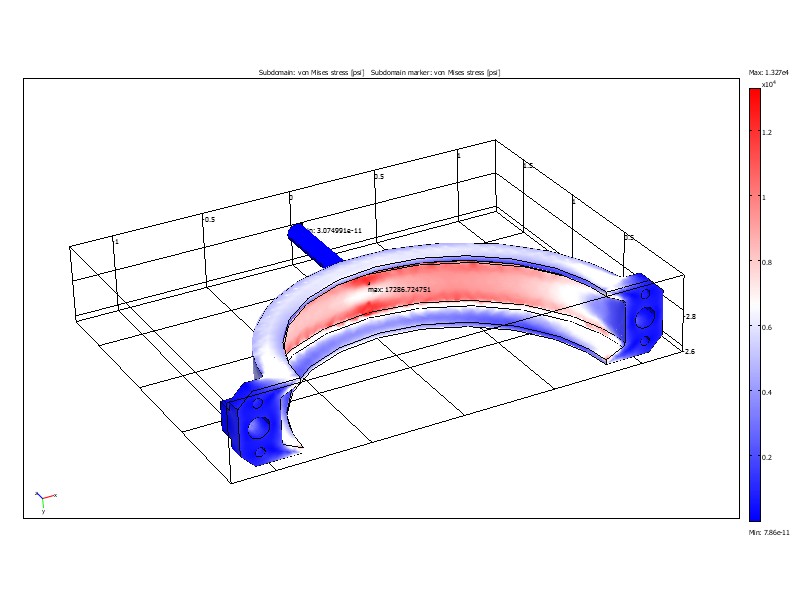
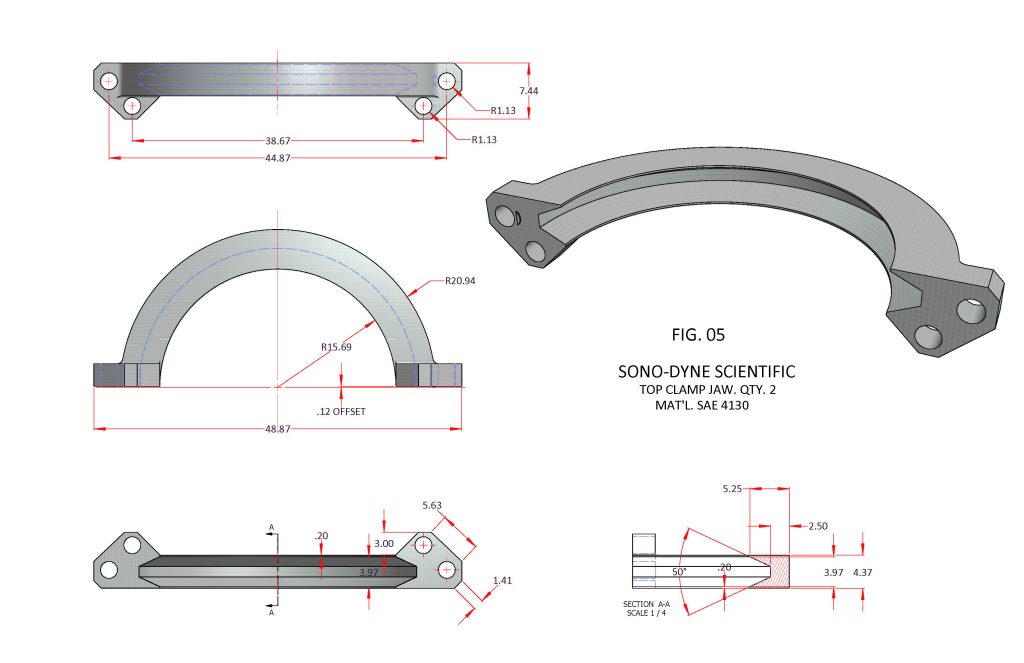
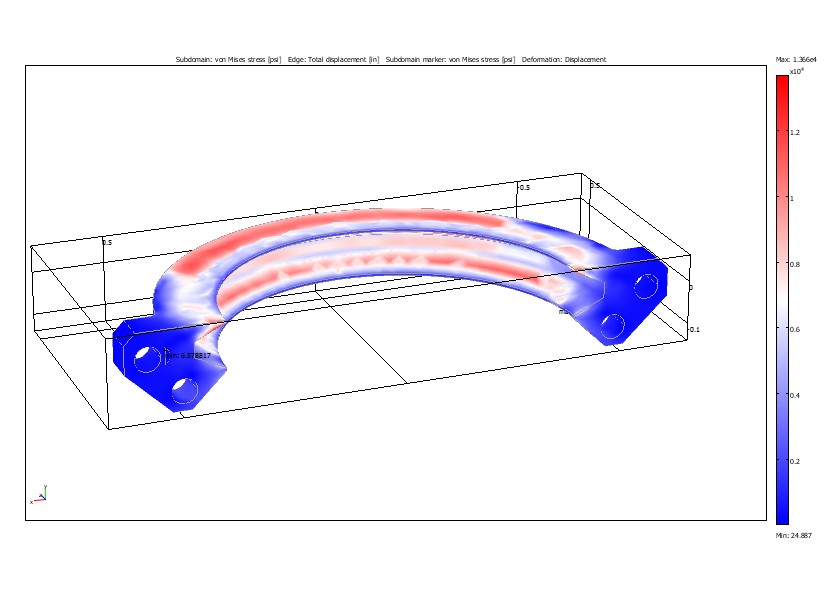
Comsol Multi-Physics FEA model shows a safety factor of 5 with 1500 PSI pressure applied to the inside vee clamping flanges. Higher pressures can be accommodated with increased web thickness. SAE 4130 steel billet is fabricated with the appropriate specified internal vee clamping geometry CNC machined after rough rolling to the requirred radius.
The bottom port cover needs 4 bolts and nuts to secure in its seated position and the top port needs just 2 bolts and nuts. Fig,10 shows an auxilliary emergency cover held fast with conventional bolts in the event that the lateral clamping jaws do not open for any reason at the top of the drum..
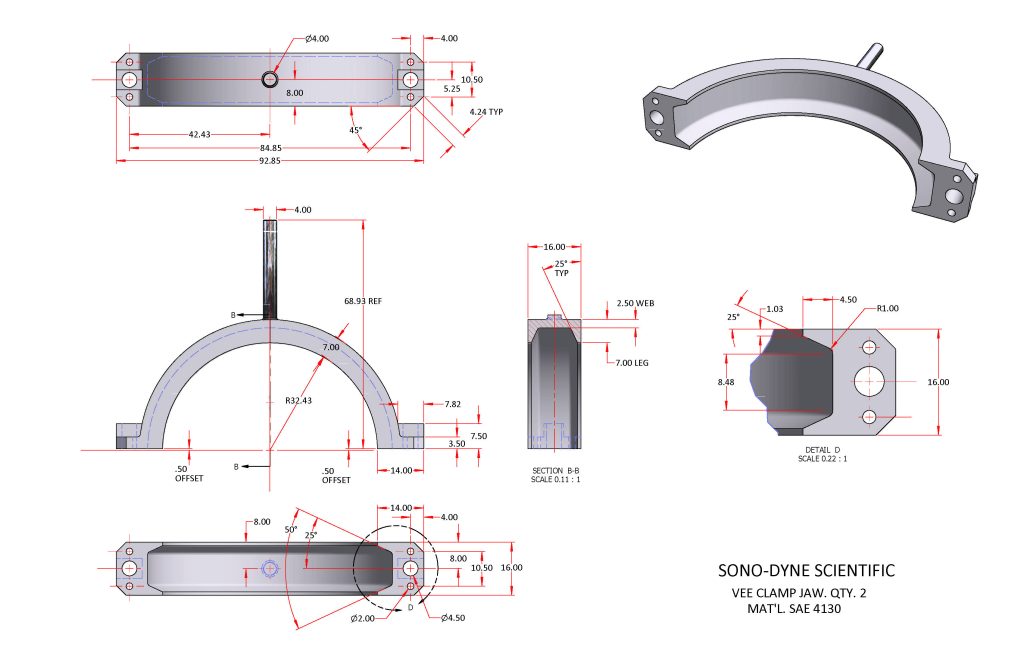
Bottom Vee Clamp Segment